
SHARE ON
YOU MAY ALSO LIKE:
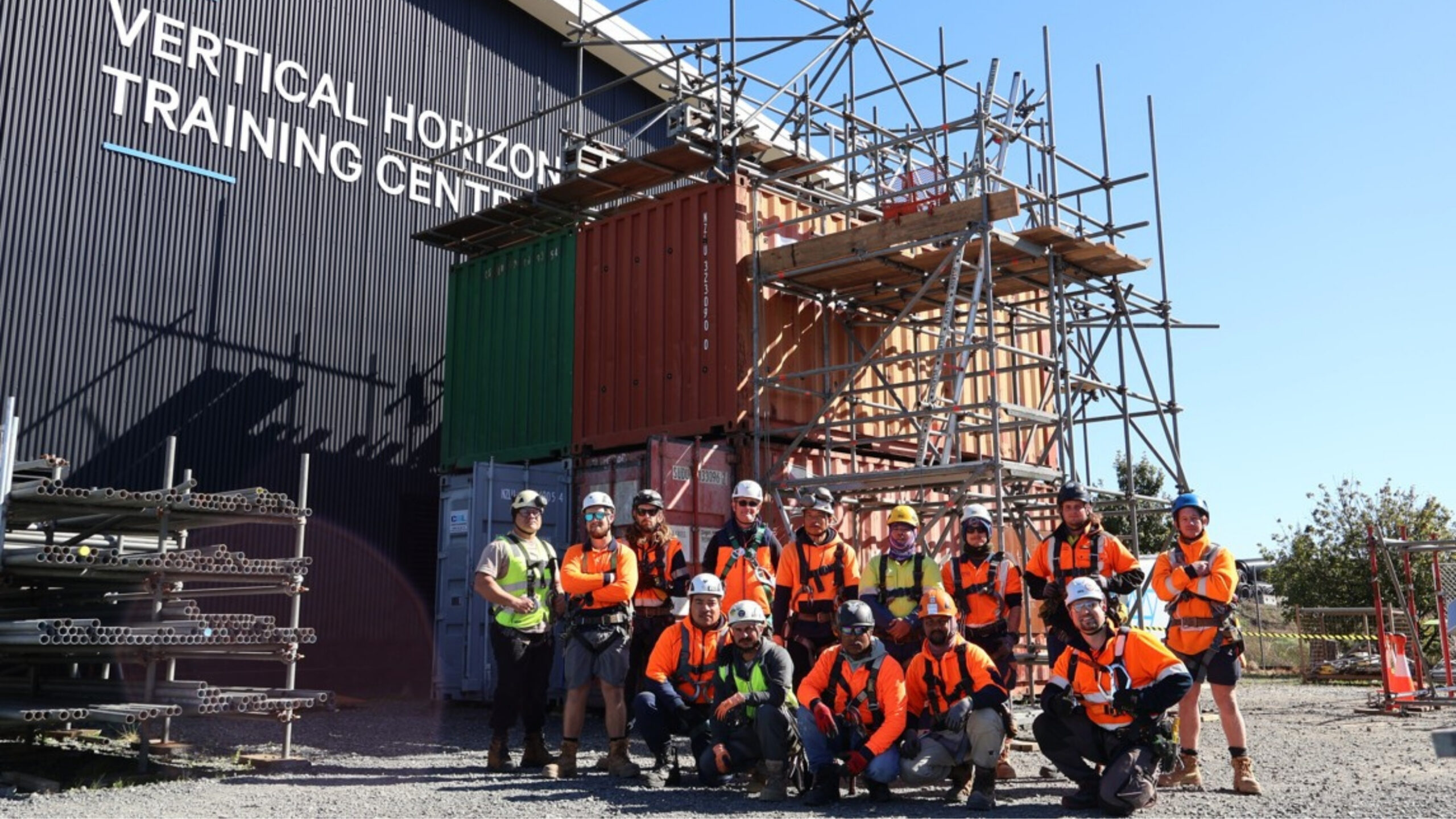
A group of 12 experienced scaffolders gathered at the Vertical Horizonz New Zealand (VHNZ) Papakura Centre on 17 August 2026 for the start of something few people in the industry reach: the New Zealand Certificate in Scaffolding (Advanced) (Level 5) programme.
Level 5 sits at the peak of New Zealand’s scaffolding training pathway. Most learners arrive with solid experience behind them, having developed their skills on a wide range of projects and demonstrated their capability through earlier qualifications. This is where experienced scaffolders step into the most complex aspects of the trade.
The first training block brought together learners from across the country for a week of theory and practical learning. During the course, they built and dismantled a range of advanced scaffold structures, including loading platforms, roof saddles, cantilevers, hanging scaffolds and gantries, reaching heights of up to 6.5 metres.
Alongside the practical builds, learners explored the engineering principles that sit behind advanced scaffolding. The programme introduces complex scaffold types, methods and planning requirements, with a strong focus on understanding loads, counterweights and the forces acting on structures.
Lead trainer Don Stewart says one of the most rewarding parts of delivering Level 5 is seeing experienced scaffolders continue to develop their thinking and problem-solving skills.
“This group has been awesome,” says Don. “Any trainer loves seeing the progression. When you get to see people come from Block 1 all the way through to the final block of Level 5 and watch them become older and wiser, it’s incredible.”
For Don, having a purpose-built training environment capable of supporting advanced scaffolding programmes is a real advantage.
“This is a controlled environment where learners can try things, work through complex scenarios and still be safe. Having a facility like the VHNZ Papakura Centre means we can create the kind of advanced builds and challenges that help learners develop their judgement and confidence.”
At this level, technical knowledge alone is not enough. Advanced scaffolders are expected to assess changing site conditions, identify risks and adjust plans when requirements shift.
“When learners are good at problem solving, they can confidently work through potential issues or adapt when job requirements change,” says Don.
For the learners in this first cohort, the week marked the beginning of the final stage in their formal scaffolding training journey. With the first block now complete, they return to worksites around New Zealand to complete on-job requirements and logbooks before coming back in February 2027. After years spent building their skills in the industry, the opportunity to learn alongside peers with similar experience made for a memorable first week as they work towards New Zealand’s highest scaffolding qualification.
SHARE ON
YOU MAY ALSO LIKE: